How Much Does Septic Tank Pumping Cost in Santa Clarita, CA?
Typical market ranges by tank size, the six factors that move the price, and the add-on fees to expect — plus how to keep the bill at the routine price. Every range on this page is a published market figure, not a quote: your exact price comes from a free on-site estimate.
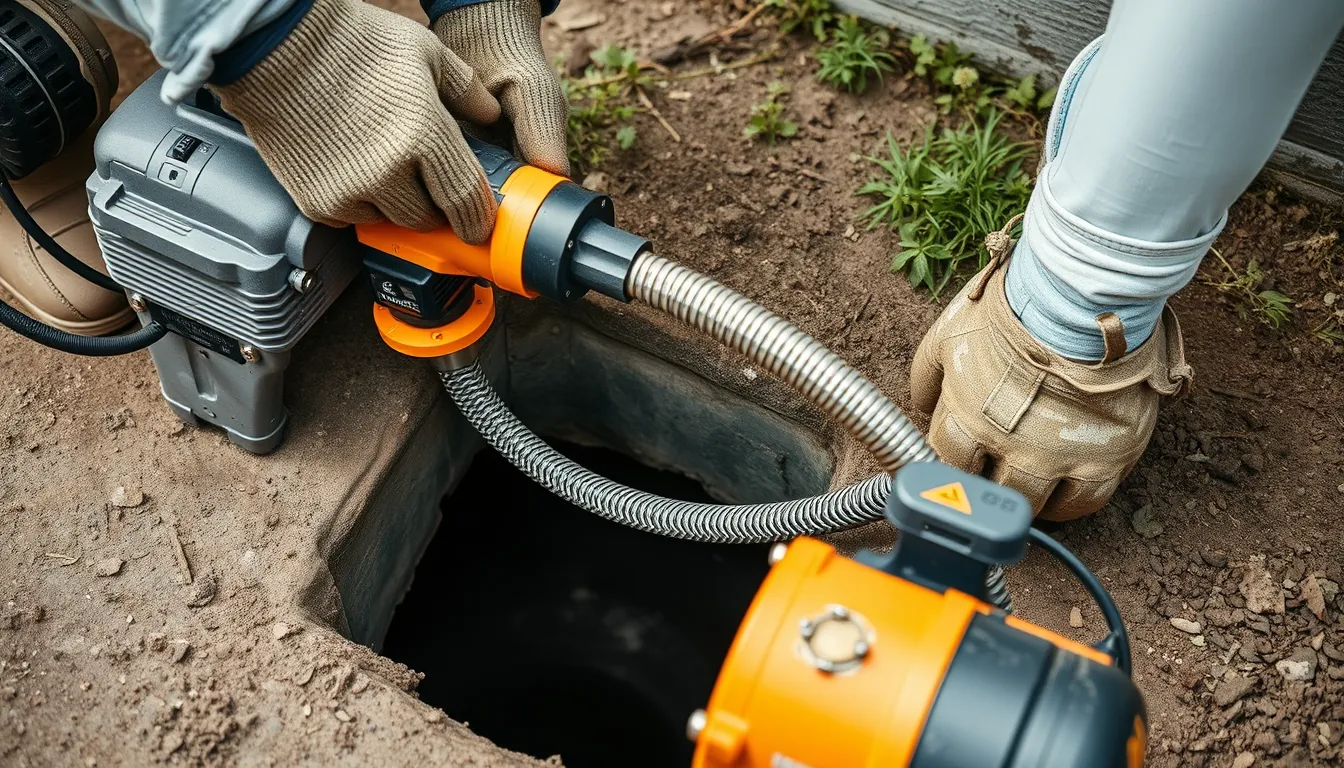 Septic Tank Pumping Cost in Santa Clarita, CA
If your home in the Santa Clarita Valley runs on a septic system, pumping is the one service you will need again and again — every three to five years for most households. The question every homeowner asks first is the same: how much will it cost? It depends on tank size, how full it is, and how easy the lid is to reach — but the market ranges are well documented, and this page lays them out.
Important: every price on this page is a typical market range published by national guides such as Angi and This Old House and by Southern California operators. These are not our prices and not a quote. Clean Septic Tanks gives your exact price from a free on-site estimate — call (661) 441-3952 or send the form below.
Septic pumping cost at a glance
For most Santa Clarita Valley homes, a routine pump-out falls in the typical national range published by Angi: an average of $428, with most jobs between $297 and $578. This Old House reports a similar picture — $420 on average. The most common residential tank, 1,000 gallons, typically runs $325 to $700.
Those are national figures. Southern California operators publish similar numbers: San Diego companies quote $300 to $600 for a standard pump-out, and a Los Angeles operator lists around $450 for a tank under 1,000 gallons.
| Service | Typical market range |
|---|---|
| Routine pump-out (1,000 gal) | $325–$700 |
| Emergency same-day pumping | $600–$1,200 |
Typical market ranges — not a quote. Your exact price comes from a free on-site estimate.
Cost by tank size
Tank size sets the price first, because a bigger tank holds more waste and takes the truck longer to empty. The table below uses the ranges Angi publishes for 2026. A 750-gallon tank is common in smaller or older homes; 1,000 gallons is the standard for a three- or four-bedroom house; 1,250 and 1,500 gallons serve larger homes.
If you do not know your tank size, do not guess — it is on the tank lid or in the original permit, and our technician confirms it on the visit. Size also decides how often you pump: a small tank serving a large household fills faster than a large tank serving two people.
| Tank size | Typical market range | Common for |
|---|---|---|
| 750 gal | $250–$550 | Small or older homes |
| 1,000 gal | $325–$700 | 3–4 bedroom homes |
| 1,250 gal | $375–$900 | Larger homes |
| 1,500 gal | $450–$1,100 | Large homes, high use |
| 1,750 gal | $550–$1,250 | Very large homes |
Typical market ranges (Angi 2026) — not a quote.
What moves the price up or down
Six factors move a pump-out up or down from the typical range, and most are about access and condition rather than the tank itself. A tank that is easy to find and open is a fast job; a buried tank, or one full of heavy sludge, takes longer and costs more.
The biggest single factor after size is sludge depth. A tank pumped on schedule has a normal sludge layer that comes out easily. A tank left for ten years has compacted sludge that has to be broken up, and in the worst cases the outlet is blocked and solids have started moving into the drain field — turning a pump-out into a repair.
- Tank size — bigger tanks hold more waste and take longer to empty
- Sludge depth — compacted sludge takes longer to break up and remove
- Lid depth and access — a buried lid adds digging time
- Distance from truck to tank — a long hose run slows the job
- Disposal fees — waste is hauled by a licensed hauler
- Timing — same-day and after-hours emergency calls carry a premium
Add-on fees
A pump-out quote can include more than the pumping itself. The most common add-ons are digging out a buried lid, installing a riser so the next visit is faster, and adding an inspection while the tank is open. None of these is a surprise charge when agreed before the work starts. Emergency timing is the add-on that surprises people most: a same-day or after-hours call-out typically runs $600 to $1,200 for the pumping alone, against the routine range for the same tank.
| Add-on | Typical market range |
|---|---|
| Digging / locating a buried lid | $50–$250 |
| Riser installation | $300–$1,000 |
| Camera inspection add-on | +$125–$500 |
| Pump + inspection combo | $300–$650 |
| Emergency same-day pumping | $600–$1,200 |
Typical market ranges — not a quote.
Pumping vs. cleaning vs. inspection costs
Pumping, cleaning and inspection are three different services with three different prices, and mixing them up is the most common source of confusion on a bill. Pumping removes the bulk of the contents — the liquids and the sludge. Cleaning goes further: the walls, the baffles and the effluent filter are washed down, which takes longer and costs more. An inspection is a check, not a clean, and its price depends on how deep it goes. Replacement is the number to keep in perspective: a full system replacement typically runs $3,460 to $24,000, and a failed system repair or replacement typically runs $5,000 to $15,000 — against that, a routine pump-out every three to five years is the cheapest insurance a septic system has.
- Visual / functional inspection — typically $150–$250
- Full / loaded inspection for a home sale — $300–$650
- Camera scope add-on — +$125–$500
| Service | Typical market range | What it includes |
|---|---|---|
| Pumping | $250–$1,100 (by tank size) | Removes liquids and sludge |
| Cleaning | $400–$1,000 | Pumping plus walls, baffles and filter |
| Inspection | $150–$650 (by type) | Visual check to full point-of-sale inspection |
Typical market ranges — not a quote.
Santa Clarita vs. national prices
Santa Clarita Valley prices sit at or slightly above the national averages, the normal pattern for Southern California. Angi's national average is $428, with most jobs between $297 and $578; This Old House reports $420 on average, typically $290 to $560. San Diego operators publish $300 to $600 for a standard pump-out, and a Los Angeles operator lists around $450 for a tank under 1,000 gallons, plus $450 per additional compartment. The gap is not mysterious: labor, disposal and driving time cost more here, and hillside or rural lots add access time. What does not change is the structure of the bill — tank size first, then access and condition. A homeowner who pumps on schedule pays the routine range.
How to keep the bill down
The cheapest septic bill is the routine one. Pumping every three to five years keeps the sludge layer thin, the outlet clear and the drain field healthy, so every visit stays a simple pump-out instead of a repair. That is roughly $100 to $200 a year — against $5,000 to $15,000 for a failed-system repair.
The second saving is access. Know where your lid is, keep it clear, and consider a riser: its one-time cost is repaid every time the truck does not have to dig. The third is timing — book before the tank is overdue, not after the drains back up, because an emergency call-out costs roughly double the routine price.
- Pump on schedule — every 3–5 years for most households
- Expose the lid before the truck arrives, or add a riser
- Keep a record of tank size, lid location and last pump-out
- Book before the tank is overdue — never after a backup
- Fix small problems early — a clogged filter is cheap, a failed field is not
Get your exact price — free on-site estimate
A few details is all it takes — tank size if you know it, when it was last pumped, and where the lid is. We reply within one business day with next steps and a free on-site estimate.
Prefer to talk? Call (661) 441-3952 — we answer 24/7. The ranges on this page are typical market figures; the number that matters is the one for your tank, and that comes from the visit.
Need more than a pump-out? See septic tank pumping, septic tank inspection and 24/7 emergency pumping.
Request a Free Estimate
Tell us about your septic system — we reply within one business day.