Septic Tank Installation in Santa Clarita, CA
A new septic system for your Santa Clarita Valley home, installed right the first time — site evaluation, permits, excavation and final inspection handled by our team.
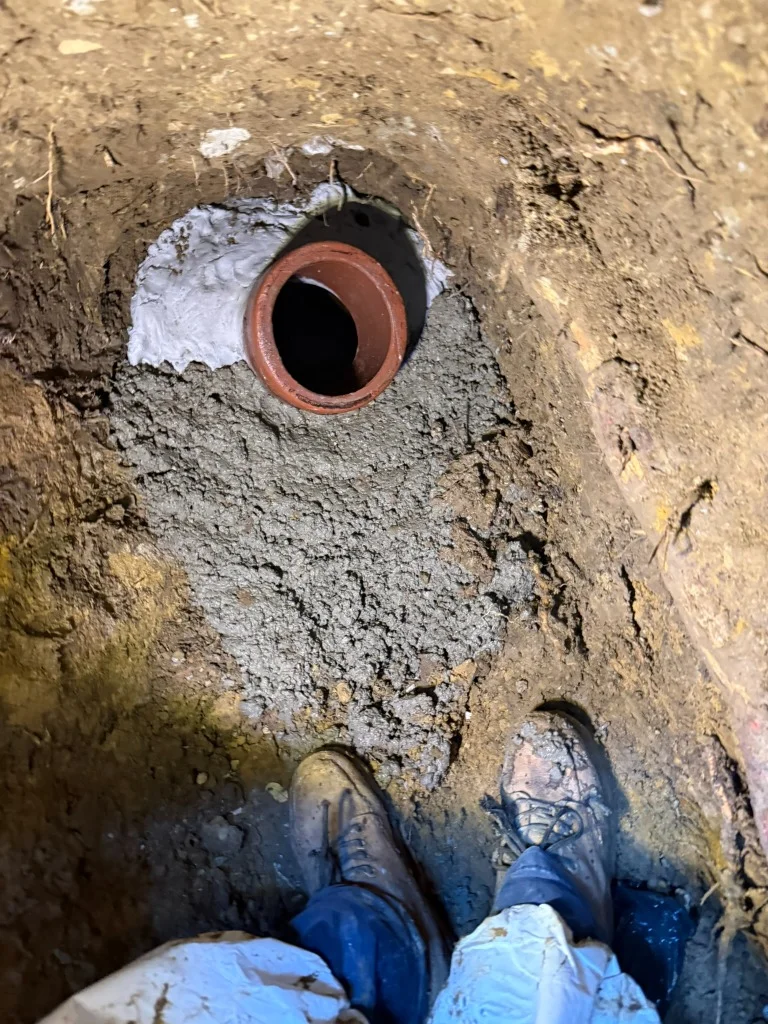 Septic Tank Installation
Most homes in the Santa Clarita Valley beyond the city sewer lines rely on a septic system, and a new installation is a bigger decision than a repair or a pump-out. The tank, the drain field and the soil under your yard have to work together for decades, so the choices made on installation day decide whether the system runs quietly or becomes a recurring problem. Clean Septic Tanks installs septic systems across Santa Clarita, Valencia, Canyon Country, Newhall and Castaic, and this page explains how the process works, what kinds of systems are available, and what to expect before, during and after the work.
A new septic system is needed in a few common situations: a home built on a lot with no sewer connection, an older system that has failed beyond repair — usually a cracked tank or a drain field that no longer absorbs water — or a household that has outgrown its system, with more bedrooms, more people, or an addition the old tank was never sized for. In each case the answer starts the same way: a site evaluation of the soil, the water table, the slope of the lot and the size of the household.
Installation is not a job to rush, and it is not a do-it-yourself project. It involves excavation, a permit, an inspection before anything is buried, and a system sized to your home. The sections below walk through each step, from the first site visit to the final inspection, so you know what a proper installation looks like.
New system or replacement? (when each applies)
A brand-new installation serves a home or a lot that has never had a septic system — usually new construction on a rural or hillside parcel in the Santa Clarita Valley, where the nearest sewer line is too far away to connect. The tank size, drain field layout and treatment type are matched to the house plans, the soil and the lot.
A replacement installation swaps out a system that has reached the end of its life. The old tank or drain field is removed or abandoned in place, and a new system goes in, often in a different part of the yard because the old field soil is worn out. Replacement is the right call when the tank is cracked or collapsed, the drain field stays saturated, or repairs would cost nearly as much as starting over.
The third case is an upgrade. The system still works, but the household has grown past what it was built for — a home addition, a converted garage, or a family that has doubled in size. An undersized tank fills too fast, the drain field gets overloaded, and pump-outs become frequent. A larger tank and a bigger field solve the problem at its root instead of treating the symptoms every year.
Types of septic systems
A conventional gravity system is the simplest and most common type in the Santa Clarita Valley. Wastewater flows into the tank, solids settle, and the liquid flows by gravity into the drain field, where the soil filters it. It has no pump and no electronics, so there is very little to break, and it works best on a lot with good, deep soil and enough slope for gravity to do the work.
A pressure distribution system uses a pump to push effluent evenly through the drain field instead of letting it flow to one low spot. It fits flat lots, shallow soil, or a field that sits higher than the tank. The pump needs electricity and can fail, but spreading the load across the whole field can make the field last longer.
An aerobic or advanced treatment system adds air and bacteria to break down waste more thoroughly before it reaches the soil. It is used where the soil is thin, the water table is high, or the lot is small and the field has to do more with less space. It treats water to a higher standard, but needs electricity, regular maintenance and periodic service visits.
A seepage pit is a deep, lined hole that lets effluent soak into the ground below the surface. Older properties in the Santa Clarita Valley, especially hillside lots in Canyon Country, Newhall and Castaic, sometimes have one instead of a shallow drain field. Seepage pits are still built in some situations, usually as part of a system that also includes a tank, and they need the same soil and groundwater checks as any other design.
Site evaluation: soil, water table, and lot
Every installation starts with a site evaluation, because the soil decides what kind of system your lot can support. A technician digs test pits and checks how fast water soaks in, how deep the soil goes before rock or clay, and how high the seasonal water table rises. Deep, sandy loam can take a simple gravity system; heavy clay, shallow bedrock or a high water table needs a different design.
The shape of the lot matters just as much. A steep hillside lot in Canyon Country or a narrow parcel in Newhall may not have room for a long, flat drain field, so the design has to work with terraces, a pumped system or a seepage pit. Setbacks matter too: the system must sit a set distance from the house, the property line, any well and any slope, and those distances shape where the tank and field can go.
The evaluation also looks at the house itself — bedrooms, people, and water-hungry fixtures like a large soaking tub or a garbage disposal. A system is sized for the household, not just the house: a four-bedroom home with two people uses a system very differently from the same home with seven, and the design has to reflect that.
Permits and approvals
A new septic system needs a permit before digging starts. The local health department reviews the site evaluation and the system design to confirm the lot can handle a septic system and the design meets the rules for setbacks, soil and groundwater protection. The application includes the soil test results, a site plan showing where the tank and field will go, and the system specifications.
Our team prepares the application and the design documents, submits them, and answers the reviewer's questions. Once the permit is issued, the work is inspected at the key stages — after the tank is set and the field is built, and always before anything is backfilled. That inspection is your protection: it confirms the system was built as approved, and it makes the installation legal and documented for a future sale.
How installation works, step by step
A proper installation follows the same sequence on every job — skipping a step is how systems fail early. The site visit and soil testing come first, then the design and the permit. Only after the permit is in hand does excavation begin. The tank is set level on a prepared bed, the pipes are connected, the drain field or seepage pit is built, and the whole system is tested with water before it is covered.
The last steps are the ones homeowners notice most: the inspection, the backfill, and the grading that puts the yard back together. A good crew leaves the site clean, marks the tank lid and the field, and walks you through what was installed and how to look after it.
- Site visit and soil testing: test pits, percolation, water table, setbacks
- System design: tank size, treatment type and field layout matched to the lot
- Permit application: design and soil results submitted to the local health department
- Excavation: tank hole and trenches, with soil kept for backfill
- Tank setting: level placement on a prepared bed, inlet and outlet connected
- Drain field build: trenches or seepage pit, distribution pipes and gravel
- Inspection and testing: health-department inspection and water test before backfill
- Backfill, grading and walkthrough: yard restored, lid marked, care explained
What affects the cost of installation?
No two installations cost the same, because no two lots are the same. The biggest cost drivers are tank size, system type, drain field size, and how much excavation the lot needs. A flat lot with deep soil is straightforward; a steep, rocky hillside lot needs more digging, more material and more time.
Access is the factor homeowners forget. If the truck and excavator can reach the work area easily, the job moves fast; a narrow driveway or a slope that needs a smaller machine slows it down. Soil is the other hidden factor: clay and rock slow excavation, and a high water table can mean pumping water out of the hole while the tank is set.
Because the range is so wide, the only honest way to price an installation is a visit to your property. We give a free on-site estimate after the site evaluation, with the tank size, system type and field design spelled out. Our cost guide lays out the typical market ranges published by national guides and Southern California operators.
| Cost factor | How it affects the price |
|---|---|
| Tank size and system type | Larger tanks and advanced treatment systems cost more than a basic gravity setup |
| Drain field size | Bigger fields need more trenches, pipe, gravel and land area |
| Soil and excavation | Rock, clay and steep slopes slow digging and add labor |
| Access to the work area | Narrow or steep access means smaller machines and more time |
| Permits and inspections | Application, design review and inspection fees vary by project |
Your exact price comes from a free on-site estimate. Typical market ranges are on our cost guide page.
How long does installation take?
The physical build usually takes a few days to about a week once the permit is issued — excavation, tank setting, field construction and backfill. A simple gravity system on a flat lot with good soil is the fastest job; a pumped or advanced treatment system, or a lot with a lot of rock to remove, takes longer.
The permit is what stretches the timeline. The site evaluation, design and health-department review typically take several weeks before digging starts, and that part of the schedule is outside the installer's control. From the first site visit to the final inspection, most installations in the Santa Clarita Valley take one to three months, and a realistic schedule is set out at the estimate.
Can I install a septic tank myself?
No. A septic installation is not a do-it-yourself job, and in practice it cannot be done without a licensed installer. The design must be approved by the local health department, the work inspected before it is buried, and the system sized and built to rules that depend on soil tests most homeowners cannot run themselves.
The practical barriers are just as real. The job needs an excavator, a way to deliver and set a tank that weighs thousands of pounds, and a crew that can grade a drain field so effluent spreads evenly instead of pooling at one end. A system installed wrong — a tank out of level, a field graded backwards, a pipe with the wrong slope — will fail early, and fixing it means digging the whole thing up again.
What to expect from your installation
- A site visit and soil testing before any design or price is given
- A system sized to your bedrooms, household and lot — not a one-size-fits-all tank
- Permit application and design documents handled by our team
- Inspection before backfill, so the system is verified while still visible
- Tank lid marked and recorded for future pump-outs
- A walkthrough of the finished system and how to care for it
- A clean, regraded yard — not a pile of dirt left behind
What it costs
Every tank is different — size, sludge depth, lid access and timing move the number. The exact price comes from a free on-site estimate, but typical ranges for the Santa Clarita Valley are published on the cost guide.
- Typical pumping ranges by tank size
- Inspection, cleaning and add-on fees
- Emergency same-day pricing
- How to keep the bill down
Tell us about your septic system
A few details is all it takes — what you need, your city, and anything you already know. We reply within one business day with next steps and a free estimate.
Prefer to read first? The cost guide breaks down typical prices, and the pumping-frequency guide explains the 3–5 year rule.
Request a Free Estimate
Tell us about your septic system — we reply within one business day.