Septic Tank Replacement in Santa Clarita, CA — Cost & Process
When your septic system is past repair, we replace it properly — the right tank, the right field, permitted and inspected, with a free on-site estimate first.
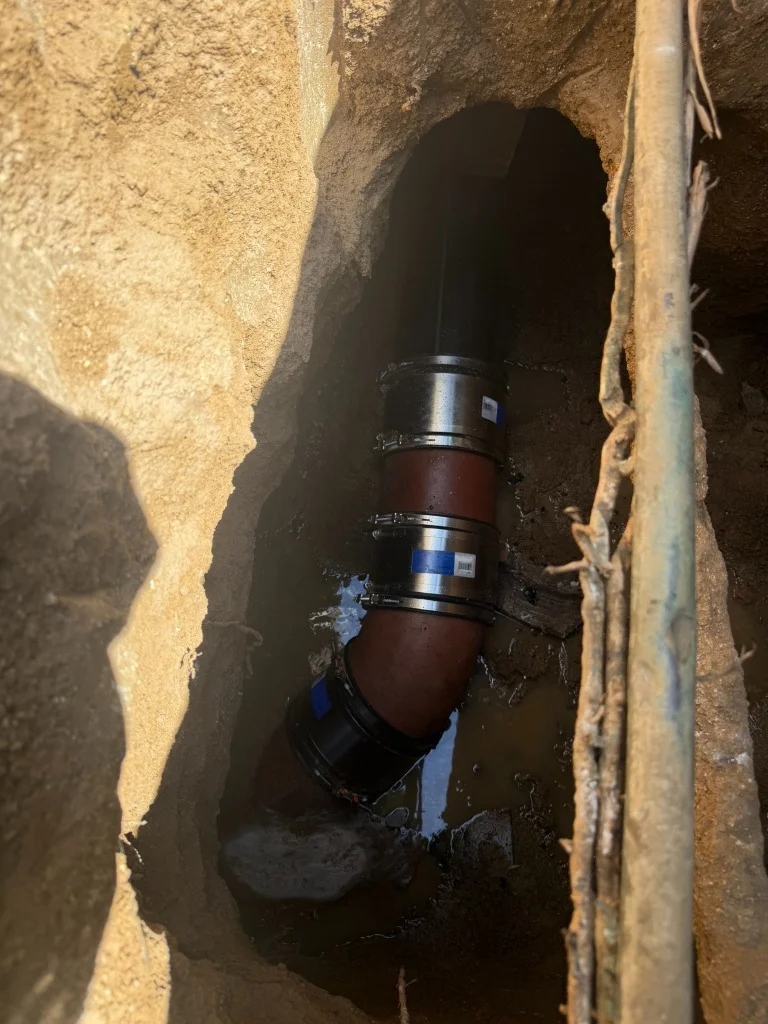 Septic Tank Replacement
A septic system does not last forever. Tanks crack, drain fields wear out, and a system sized for a small household twenty years ago may not cope with the family living there now. Replacement is the point where patching stops making sense and starting over is the cheaper, safer choice. This page explains how to tell the difference, what replacement involves, and what happens to your yard while the work is done.
Most replacements in the Santa Clarita Valley are not emergencies. They follow months or years of warning signs: slow drains that keep coming back, a pump-out that only helps for a few weeks, wet ground over the drain field, or a smell that returns every summer. When those signs point to a failed tank or field, replacing the system ends the cycle of repeat service calls — and a chance to fix the original installation's mistakes.
Repair or replace? (the decision)
The decision comes down to three questions: what is broken, how old is the system, and what will the repair buy you. A broken baffle, a clogged filter or a cracked inlet pipe is a repair — a single part, fixed in a day, with years of life left in the rest of the system — while a cracked tank, a collapsed line or a drain field that no longer absorbs water is a different story: the failure is in the structure itself. A system in its first ten years usually has enough life left to justify a repair; past twenty or twenty-five years, with a repair bill that keeps growing, replacement is usually better. The honest test is the cost of the repair against the life it buys: a repair that costs a small share of a replacement and gives several more good years is worth doing, while one that costs a large share and buys only a year or two is not. We give you both numbers after an inspection, so the decision is based on your system, not on a guess.
Signs your system needs replacing (not repairing)
Some signs point clearly at replacement: sewage backing up more than once, even after a pump-out, usually means a failed drain field; standing water or a soggy patch over the field means effluent is surfacing instead of soaking away; and a tank that is visibly cracked, collapsing or leaking cannot be patched back to reliable service. Other signs build up slowly — pump-outs that used to last three years now last three months, all drains slow at once, or grass over the field that is suddenly much greener than the rest of the lawn. Any one of these alone may be a repair, but two or three together usually mean the system as a whole is done.
- Sewage backing up more than once, even after a pump-out
- Standing water or soggy ground over the drain field
- A cracked, collapsed or leaking tank
- Pump-outs needed every few months instead of every few years
What replacement costs
Replacement is priced by scope, not by a flat rate. Replacing only the tank is the smallest job; replacing the tank and the drain field is the full job, and most failed systems need it, because a field that has served for twenty years rarely has much life left once the tank is out. The full system also includes the pipes, the distribution box and the access risers.
| Option | What it includes | When it applies |
|---|---|---|
| Tank only | New tank, connections, risers | Tank cracked or collapsed, field still healthy |
| Tank and field | New tank, field, pipes, distribution box | Field failed or worn out with the tank |
| Full system | Tank, field, treatment, all connections | System undersized, badly sited or at end of life |
Your exact price comes from a free on-site estimate after inspecting the existing system.
What drives the price
Tank size is the first driver: a larger household needs a larger tank and field, and both cost more to build. The condition of the drain field is the second — a field that can be rebuilt in the same spot is cheaper than one that has to move because the old soil is exhausted. Access and soil are the drivers that surprise people: a yard the excavator can reach easily is a fast job, while a steep hillside lot in Canyon Country or a narrow side yard in Newhall slows everything down. Rock and clay slow excavation, a high water table can mean pumping water out of the hole while the new tank is set, and permits and inspections add their own cost, which varies with the scope of the project.
- Tank and household size — bigger families need bigger systems
- Drain field condition — rebuild in place or move to fresh soil
- Access — wide and flat is fast; steep or narrow is slow
- Soil — rock, clay and a high water table all add labor
- Permits and inspections — application, design review and sign-off
Replacement vs. new installation
Replacement and new installation look similar on the day — both involve excavation, a new tank and a new field — but a new installation is designed for an empty lot, while a replacement has to work around the old tank, the old field, the house, the driveway and the landscaping. That makes replacement a diagnostic job first: the old system must be inspected and often pumped and exposed before the new design is final, and the new field often goes in a different part of the yard, because the soil under the old field is saturated with twenty years of use.
How replacement works, step by step
Replacement starts with an inspection of the existing system: a pump-out, a look inside the tank, and a check of the drain field. That inspection decides the scope — tank only, or tank and field — and it is the basis for the estimate. On the work days, the old tank is pumped, removed or abandoned in place, and the new tank is set level on a prepared bed. The new drain field is built, usually in fresh soil, and the pipes and distribution box are connected. The system is inspected before backfill, tested with water, then covered and graded, and the last step is a walkthrough of the new lid, the field layout, and what to do — and not do — over the field from now on.
How long does it take — and what happens to your yard?
The physical work usually takes several days to about a week once the permit is issued, and the full process, from the first inspection through the permit and the final sign-off, typically takes one to three months, with the permit review taking the longest. Your yard will be dug up — there is no way to replace a tank and a field without excavation — but a good crew keeps the work to the tank strip and the new field area, keeps topsoil separate so it goes back on top, and regrades the ground. Expect the work area to look rough for a few weeks while the soil settles, and keep cars and deep-rooted planting off the new field permanently.
What to expect from your replacement
- An inspection of the old system before any price is given
- A clear repair-or-replace comparison, with both options priced
- A new design sized to your household, not a copy of the old one
- Permits and inspections handled by our team
- The new field in fresh soil where the old one is worn out
- A walkthrough of the new system and how to protect the field
What it costs
Every tank is different — size, sludge depth, lid access and timing move the number. The exact price comes from a free on-site estimate, but typical ranges for the Santa Clarita Valley are published on the cost guide.
- Typical pumping ranges by tank size
- Inspection, cleaning and add-on fees
- Emergency same-day pricing
- How to keep the bill down
Tell us about your septic system
A few details is all it takes — what you need, your city, and anything you already know. We reply within one business day with next steps and a free estimate.
Prefer to read first? The cost guide breaks down typical prices, and the pumping-frequency guide explains the 3–5 year rule.
Request a Free Estimate
Tell us about your septic system — we reply within one business day.