Septic Tank Repair in Santa Clarita, CA
From a broken baffle to a clogged drain field, we find the fault and fix it, then test the system before we leave. Serving the Santa Clarita Valley, with emergency repairs 24 hours a day.
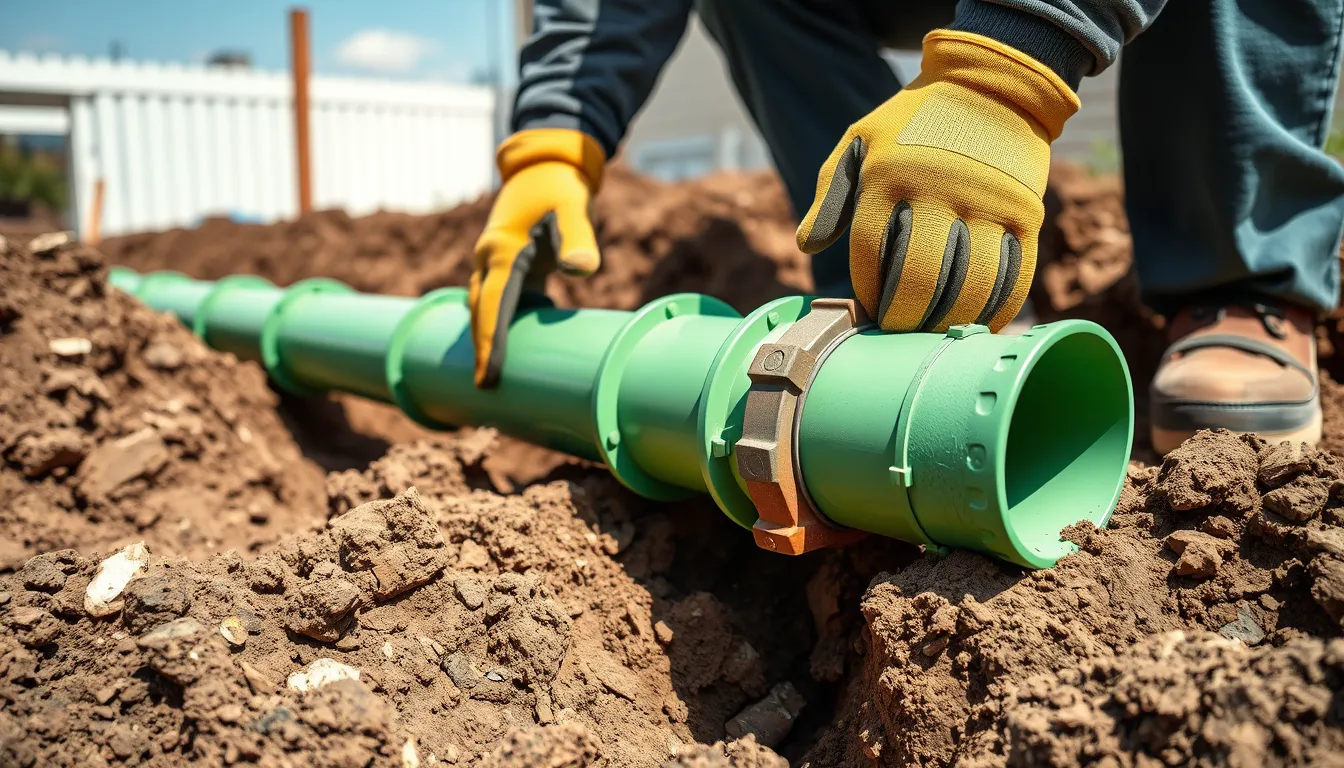 Septic Tank Repair
A septic system is simple by design, and that is why it usually lasts for decades. But parts wear out, pipes shift in the soil, and a drain field can clog when it is overloaded. When something breaks, the symptoms show up fast: slow drains, gurgling pipes, odors, wet spots in the yard, or sewage backing up into the house. A repair fixes the broken part, without replacing the whole system.
Clean Septic Tanks provides septic tank repair across the Santa Clarita Valley, including Santa Clarita, Valencia, Canyon Country, Newhall and Castaic. We are based in Santa Clarita and available 24 hours a day, seven days a week, including emergency repairs for backups and overflows. Our crews diagnose first, explain the fix, and test the system before they leave.
This page explains what breaks on a septic system, the signs you need a repair rather than a pump-out, drain field problems and whether a leach field can be unclogged, how we decide between repair and replacement, how a repair is done, what it costs, and what happens when the repair is an emergency.
What breaks on a septic system?
A septic system has a short list of parts, and each one can fail in its own way. The tank can crack from ground movement or age, letting liquid leak out or groundwater leak in. The inlet and outlet baffles, which direct flow and keep solids out of the drain field, can corrode, collapse or fall off. The effluent filter can crack or clog beyond cleaning. Pipes can shift, crack or collapse, and tree roots can block the flow.
Past the tank, the distribution box can settle unevenly and send all the flow to one drain field line, overloading it while the others sit dry. The drain field itself can clog with a thick biomat, the layer of bacteria and solids that forms in the soil, and once the biomat is too thick the soil can no longer absorb liquid. Pump systems add their own failure points: the pump, the float switch and the alarm. Finding which part failed comes first.
- Tank: cracks, leaks and structural damage
- Baffles: corroded, collapsed or missing inlet and outlet baffles
- Effluent filter: cracked or clogged beyond cleaning
- Pipes: shifted, cracked or collapsed lines, and tree root intrusion
- Distribution box: settled or damaged, sending uneven flow
- Drain field: clogged biomat that stops the soil absorbing
Signs you need a repair, not just a pump-out
A pump-out fixes a full tank. It does not fix a broken part, and the difference shows up in the symptoms. If your drains were slow before the pump-out and are still slow after it, something beyond the tank is wrong. If sewage backs up again within weeks of a pump-out, the tank is filling too fast because liquid is not leaving properly, or groundwater is leaking in.
Other signs point to specific parts. Gurgling pipes and odors that persist after pumping suggest a blocked or broken baffle or filter. Wet spots, ponding or unusually green grass over the drain field point to the field itself. An alarm that keeps sounding on a pump system means the water level is rising and the pump or float is not doing its job. If any of these sound familiar, call us before booking another pump-out.
Drain field problems
The drain field is where the system does its final work, and it is the part most often damaged by neglect. When a tank goes too long without pumping, solids escape into the field and feed a thick biomat in the soil. The biomat seals the soil surface, liquid can no longer soak away, and it starts ponding in the yard or backing up into the house. Heavy water use, a leaking fixture, or driving over the field can damage it the same way.
Whether a clogged field can be fixed depends on how bad the clog is. A field that is partly clogged can sometimes recover with rest, reduced water use and treatment of the biomat, but a field that is fully clogged and ponding usually needs repair work or replacement of the affected lines. We will assess the field honestly and tell you which it is. If a repair is possible, we will do it. If the field has failed, we will explain the replacement options.
Repair vs. replace: how we decide
The decision between repair and replacement comes down to three questions: what is broken, how old is the system, and what will the fix cost compared with a new system. A broken baffle, a cracked filter or a single damaged pipe is almost always a repair. A cracked tank or a failed drain field is a bigger question, because the repair can cost a large share of a replacement and may not last as long.
Age matters too. A system that is twenty years old and has already needed several repairs is a poor candidate for another large repair, because the next failure is likely close behind. A younger system with one failed part is worth fixing. We will give you both prices when the choice is close. The decision is yours, and we will not push you toward the more expensive one.
How a repair is done
Every repair starts with a diagnosis. We inspect the tank, check the levels, run water through the system, and use a camera scope where we need to see inside a line. We find the fault before we quote the fix. Once we know what is broken, we explain the repair, the price and the time, and we do not start until you agree.
The work itself follows a set order. We expose the broken part, which usually means digging down to the tank lid, the pipe or the distribution box, and we keep the soil aside for backfill. We replace or repair the part, then test the system by running water through it and checking the flow, the levels and the drain field. Finally, we backfill, tidy the site, and leave a note on what was done.
- Diagnose: inspect the tank, run water, scope the lines if needed
- Explain the fault, the fix, the price and the time before starting
- Expose the broken part and keep the soil aside for backfill
- Repair or replace the part, then test flow, levels and the field
- Backfill, tidy the site and record what was done
What a repair costs
Repair costs vary widely, because a new baffle is a small job and a drain field repair is a large one. The price depends on which part failed, how deep it is buried, how much digging is needed to reach it, and whether the drain field is involved. A repair that needs excavation costs more than one done through the tank lid.
We do not publish fixed prices, because no two repairs are the same and a number quoted without seeing the fault would be a guess. For typical costs and the factors that move the price, see our cost page. When you call, describe the symptoms and we will arrange a diagnosis. After the diagnosis we will give you a clear price before any work starts, and if the repair is not worth doing we will say so.
Emergency repairs
Some septic problems cannot wait. Sewage backing up into the house, a tank overflowing into the yard, an alarm sounding on a pump system, or sewage surfacing in the garden are emergencies, and we treat them that way. We are available 24 hours a day, seven days a week, and an emergency visit starts with a pump-out and a diagnosis.
While you wait for the crew, stop using water: no laundry, no showers, no long flushes, because every gallon adds pressure to a system that is already failing. Do not add chemical additives or try to pump the system yourself. If the problem is a backup, keep children and pets away from the affected area. Call us at (661) 441-3952, describe what is happening, and we will get a crew to you as quickly as possible. After the emergency is controlled, we will explain the repair and the price before further work.
If you suspect a septic repair is needed
- Note the symptoms: slow drains, odors, wet spots, alarms
- Check whether the problem returned after a pump-out
- Stop heavy water use if sewage is backing up
- Keep cars off the tank and drain field
- Find your septic records and pump-out dates
- Call us for a diagnosis before booking another pump-out
What it costs
Every tank is different — size, sludge depth, lid access and timing move the number. The exact price comes from a free on-site estimate, but typical ranges for the Santa Clarita Valley are published on the cost guide.
- Typical pumping ranges by tank size
- Inspection, cleaning and add-on fees
- Emergency same-day pricing
- How to keep the bill down
Tell us about your septic system
A few details is all it takes — what you need, your city, and anything you already know. We reply within one business day with next steps and a free estimate.
Prefer to read first? The cost guide breaks down typical prices, and the pumping-frequency guide explains the 3–5 year rule.
Request a Free Estimate
Tell us about your septic system — we reply within one business day.