Septic Tank Cleaning in Santa Clarita, CA
A deep clean goes further than a pump-out: walls washed down, baffles cleared, the effluent filter cleaned, and the drain field checked. Serving the whole Santa Clarita Valley, 24 hours a day.
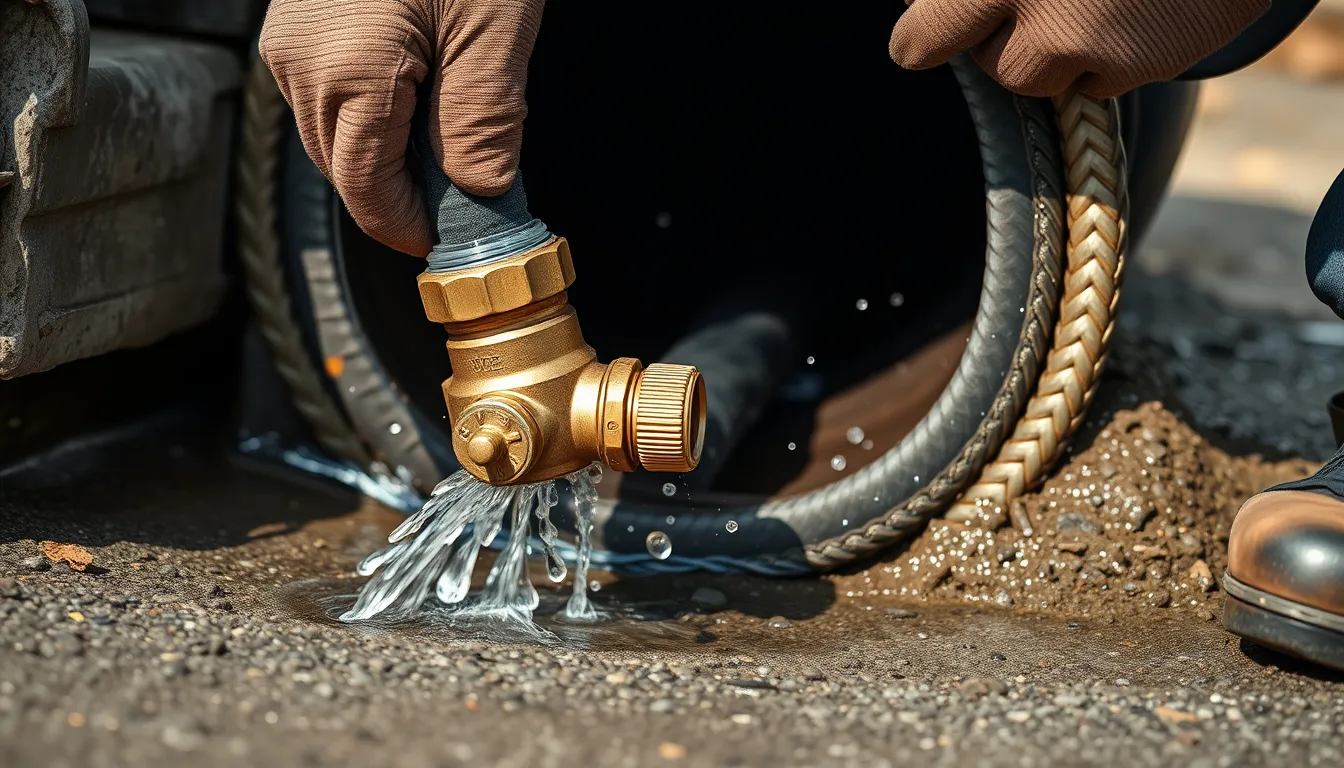 Septic Tank Cleaning
Pumping empties a septic tank. Cleaning restores it. Over the years between pump-outs, a sticky layer of solids builds up on the tank walls, the baffles collect debris, and the effluent filter clogs with fine material. A pump truck removes the loose contents, but it does not wash those surfaces. A deep clean does, and it is the difference between a tank that is empty and a tank that works like it should.
Clean Septic Tanks provides septic tank cleaning for homes and businesses across the Santa Clarita Valley, including Santa Clarita, Valencia, Canyon Country, Newhall and Castaic. Our crews are based in Santa Clarita and available 24 hours a day, seven days a week. A cleaning visit takes longer than a simple pump-out, because the work is more thorough, but the result is a system that drains better, smells better and lasts longer.
This page explains the difference between pumping and cleaning, what a deep clean includes, the effluent filter that most owners forget about, how often a tank should be cleaned, the signs that cleaning is what you need, what it costs, and when a clean alone will not fix the problem.
Cleaning vs. pumping: which one do you need?
Pumping and cleaning solve different problems, and knowing which one you need saves you from paying for the wrong service. Pumping removes the bulk contents of the tank: the liquids, the sludge on the bottom and the scum on the surface. It is the routine service, done every three to five years, and for a healthy system it is usually all that is needed.
Cleaning is the thorough service. It starts with a full pump-out, then adds washing down the tank walls, clearing the inlet and outlet baffles, cleaning the effluent filter, and using high-pressure water jetting where buildup is stubborn. You need cleaning rather than pumping alone when the tank has gone too long between services, when drains are slow even after a pump-out, when odors persist, or when the filter and baffles are clogged with buildup that a vacuum hose cannot remove.
If you are not sure which one applies to your tank, tell us the symptoms when you call. Slow drains after a recent pump-out, gurgling pipes, recurring odors or a filter that has never been cleaned all point toward a deep clean. A tank pumped on schedule with no symptoms usually needs only a routine pump-out. We will look at the tank before we recommend anything.
What's included in a deep clean
A deep clean is a full service, not a quick wash. We start by pumping the tank completely empty, so every surface is exposed and nothing is hidden under liquid. Then we wash down the interior walls to remove the crust and residue that has built up over years. The inlet and outlet baffles are cleared of debris and checked for damage, because a blocked baffle forces solids toward the drain field.
Next we remove and clean the effluent filter, which is the last line of defense between the tank and the drain field. We flush the lines with high-pressure water jetting where the buildup is heavy, especially around the baffles and the outlet. Finally, we check the drain field area for wet spots, ponding or odors, and we leave you with a report on the condition of the tank and what to expect next.
- Full pump-out so every surface is exposed
- Tank walls washed down to remove crust and residue
- Inlet and outlet baffles cleared and checked for damage
- Effluent filter removed, cleaned and refitted
- High-pressure water jetting on heavy buildup
- Drain field check for wet spots, ponding and odors
The effluent filter: the part everyone forgets
The effluent filter sits in the outlet of the tank, and its job is simple: it lets liquid pass through to the drain field while catching the fine solids that would clog the soil. It is one of the most important parts of the system and one of the least known. Many homeowners have never heard of it, and many tanks have a filter that has never been cleaned since it was installed.
A clogged filter causes the symptoms people blame on a full tank: slow drains, gurgling pipes, toilets that flush weakly, and in bad cases sewage backing up into the lowest fixtures in the house. The fix is straightforward. We remove the filter, clean it thoroughly, and refit it. It takes a short time during a cleaning visit, and it often solves problems a pump-out alone would leave behind. If your filter is cracked or damaged, we will tell you and replace it.
How often should a tank be cleaned?
A tank should be pumped every three to five years, and a deep clean is usually due on the same cycle, especially if the tank has gone longer than that without service. The practical rule is the sludge rule: when sludge reaches about one-third of the depth of the tank, it is time to pump and clean. Waiting past that point lets solids escape toward the drain field, and once the field is clogged the repair is far more involved than a cleaning.
Some tanks need cleaning more often. A household with a garbage disposal adds ground-up food that the bacteria cannot break down quickly. A large household fills the tank faster. A tank that serves a business, a rental property or a home with heavy laundry use will also need a shorter cycle. The table below shows the sludge-depth guide we use when we open a tank, and what each reading means for your schedule.
| Sludge depth | What it means | What to do |
|---|---|---|
| Less than one-third of tank depth | Normal buildup for a tank on schedule | Keep to the regular pumping cycle |
| About one-third of tank depth | The tank is due for service | Book a pump-out and deep clean now |
| More than one-third of tank depth | Solids may already be reaching the drain field | Clean now and have the drain field checked |
The sludge-depth guide: when sludge reaches one-third of the tank depth, the tank is due.
Signs your tank needs cleaning, not just pumping
Some symptoms point to buildup rather than a full tank. Drains that stay slow after a pump-out are the clearest sign: the tank is empty, but water still moves slowly because the baffles or the filter are clogged. Gurgling sounds from sinks and toilets mean air is trapped by partial blockages. Odors around the tank lid or the drain field suggest residue that pumping alone does not remove.
Other signs show up outside. Lush green patches or soggy ground over the drain field can mean liquid is not being absorbed evenly. A filter that has never been cleaned, or a tank that has not been opened in many years, is a reason to book a cleaning on its own merits, before symptoms appear. If any of these sound familiar, a deep clean is the right next step, and we will check the whole system while we are there.
- Drains stay slow even after a pump-out
- Gurgling sounds from sinks, tubs or toilets
- Odors around the tank lid or the drain field
- Soggy ground or unusually green grass over the field
- A filter that has never been cleaned
- A tank that has not been opened in many years
What it costs
A deep clean costs more than a simple pump-out, because it takes more time and more work: the walls are washed, the baffles are cleared, the filter is removed and cleaned, and the lines are jetted where needed. The price depends on the size of the tank, how much buildup there is, whether the lid is buried, and how easy the tank is to reach with the truck.
We do not publish fixed prices, because a tank that has not been opened in a decade is a different job from a tank cleaned on schedule. For typical costs and the factors that move the price, see our cost page. When you call, we will ask about your tank, your household and your symptoms, and we will give you a clear price for your job before any work starts.
Cleaning vs. repair: when a clean won't fix it
A deep clean fixes buildup, and buildup causes a lot of septic problems. But it cannot fix broken parts. A cracked tank wall, a collapsed baffle, a crushed pipe, a failed pump or a drain field clogged deep in the soil will still be broken after the cleanest tank in the valley. If we find that kind of damage while the tank is open, we will explain the repair honestly.
The line between cleaning and repair is usually clear once the tank is empty. Buildup washes away. Cracks, collapses and crushed lines do not. A drain field with a thick clogged biomat may need more than a clean: it may need repair or, in the worst case, replacement. Knowing the difference matters, because paying for repeated cleanings on a system that needs a repair wastes money and lets the damage get worse. See our septic tank repair page for how those repairs work.
Before your cleaning appointment
- Note any slow drains, gurgling or odors to report to the crew
- Clear access to the septic tank riser or inspection port
- Keep cars off the tank and drain field
- Avoid heavy water use on the morning of the appointment
- Ask us to check the effluent filter if it has never been cleaned
- Plan for a longer visit than a standard pump-out
What it costs
Every tank is different — size, sludge depth, lid access and timing move the number. The exact price comes from a free on-site estimate, but typical ranges for the Santa Clarita Valley are published on the cost guide.
- Typical pumping ranges by tank size
- Inspection, cleaning and add-on fees
- Emergency same-day pricing
- How to keep the bill down
Tell us about your septic system
A few details is all it takes — what you need, your city, and anything you already know. We reply within one business day with next steps and a free estimate.
Prefer to read first? The cost guide breaks down typical prices, and the pumping-frequency guide explains the 3–5 year rule.
Request a Free Estimate
Tell us about your septic system — we reply within one business day.